Whole-home heat eradication targets the physiological limits of insects. The EPA Bed Bug Resource Hub notes that prolonged exposure to high heat neutralizes bed bugs and their eggs without leaving toxic gaseous…
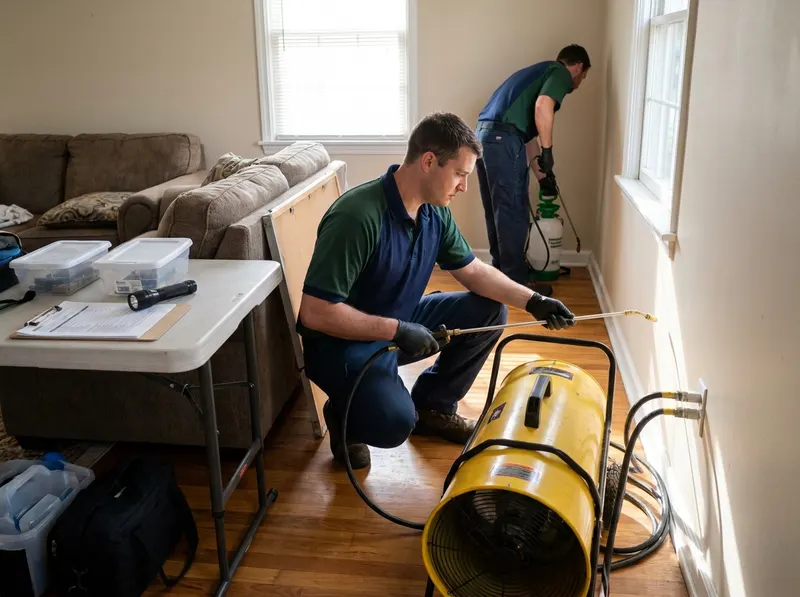
Whole-home heat eradication targets the physiological limits of insects. The EPA Bed Bug Resource Hub notes that prolonged exposure to high heat neutralizes bed bugs and their eggs without leaving toxic gaseous residues. MapleDrift Extermination deploys forced-air convection units that elevate ambient room temperatures between 120°F and 135°F, monitored by digital thermal probes. High-temperature treatments penetrate mattress cores, trim voids, and interior drywall, bypassing the insecticide resistance documented by the Pest Control Technology Association. In older structural framing found across East Nashville and Germantown, thermal remediation enters deep wall voids where conventional aerosol sprays fail to reach.
While thermal treatments provide immediate elimination of adult insects and viable eggs, persistent perimeter management requires a second layer of defense. Following structural cooling, technicians place non-repellent liquid barriers and botanical desiccants along baseboards, switch plates, and plumbing chases according to National Pesticide Information Center guidelines. This hybrid protocol satisfies standards from the National Pest Management Association by preventing re-infestation from adjacent units or untreated structural voids. Properties situated near the Cumberland River corridor and shaded areas around Percy Warner Park often exhibit elevated baseline indoor humidity, which can protect early-instar nymphs from desiccation; combining dynamic heat distribution with silica-based dusts circumvents this environmental variable.
Operational prep work determines outcome quality. Before heating begins, technicians reference safety checklists from the Occupational Safety and Health Administration to secure aerosol cans, wax items, and fine electronics. The physical treatment process adheres to structural fire and electrical protocols endorsed by the National Fire Protection Association, running heavy-duty electric and indirect-fired heaters from exterior mobile generators rather than taxing interior residential panels. Homeowners in Belmont-Hillsboro, The Nations, and Sylvan Park receive digital entry-point mapping displaying exact temperature distributions achieved per zone. For chemical application safety, products meet registration benchmarks from the Tennessee Department of Agriculture Regulatory Services, maintaining human and pet structural safety once dry.
1. Structural diagnostic inspection: Technicians log infestation severity, structural layout, and thermal load requirements using visual and infrared sensors.
2. Space containment and thermal setup: Windows and exterior doors are sealed, heat sensors are positioned in deep wall voids, and high-output convection fans begin circulating heated air.
3. Monitored heat soak: Ambient air is held between 120°F and 135°F for 4 continuous hours to ensure lethal temperature transfer into furniture cores and framing.
4. Controlled cool-down and residual application: Air movers normalize indoor temperatures, followed by targeted non-repellent chemical placement along critical structural perimeters.
Every job gets a firm, written price after a free on-site visit.
Tell us about your bed bug thermal & chemical remediation job in Nashville and we'll send a clear, written quote, usually the same day.
 MapleDrift Extermination