Discovering an active colony of social hymenoptera under an eave or inside a wall void disrupts domestic peace and creates immediate sting hazards for children and companion animals. In Davidson County, warmer spring…
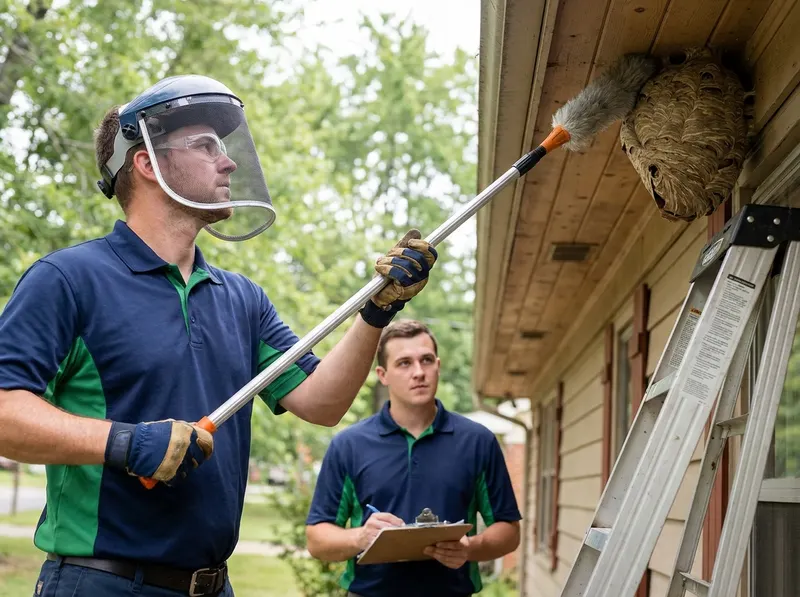
Discovering an active colony of social hymenoptera under an eave or inside a wall void disrupts domestic peace and creates immediate sting hazards for children and companion animals. In Davidson County, warmer spring seasons trigger accelerated reproductive flights for aerial species. Effective extraction requires diagnostic clarity rather than aerosol sprays bought at hardware retailers, which lack sufficient pressure and often agitate colonies into defensive swarm patterns. MapleDrift Extermination executes stinging insect nest removal through targeted structural barrier protocols, locating primary entrance voids and neutralizing defensive foragers before physically extracting the paper or mud envelope. Technicians utilize botanical and micro-encapsulated formulations aligned with EPA pesticide standards, ensuring treatment residues dry odorless and inert to maintain safety for toddlers and pets once re-entry intervals elapse.
Colony structure dictates operational methodology. Paper wasps (Polistes dominula) construct single-tier umbrella nests suspended beneath open porch ceilings in Belmont-Hillsboro and historic Victorian soffits in Germantown. These populations respond cleanly to direct physical detachment following an aerosol freeze knockdown. Conversely, baldfaced hornets (Dolichovespula maculata) erect multi-tiered, football-shaped carton nests high in mature hackberry branches or chimney eaves across Green Hills and Sylvan Park, housing up to 400 aggressive defenders. Underground colonies of eastern yellowjackets (Vespula maculifrons) frequently infiltrate root cavities or abandoned rodent burrows near the shaded edges of Shelby Bottoms Greenway and Percy Warner Park, requiring pressurized subterranean dusting to eradicate deep brood chambers without saturating native garden soils.
When queens select structural interstitial zones rather than exposed branches, the threat shifts from exterior avoidance to internal compromise. In neighborhoods like The Nations, East Nashville, and Inglewood, older siding and unsealed brick weep screeds provide unmonitored pathways into second-story attic subflooring and drywall voids. Treating interior nesting sites demands specialized acoustic tracing tools and thermal inspection to confirm chamber dimensions before treatment, preventing agitated insects from chewing through drywall margins into bedrooms. Technicians follow containment guidelines developed by the National Pest Management Association, vacuuming airborne workers with HEPA-sealed recovery units before void extraction. If an infestation is localized to an exterior tree canopy over 25 feet high, boom ladder access and directional fogging are utilized; if nests are subterranean, surface barriers and non-repellent formulations from regulatory sources like the Tennessee Department of Agriculture prevent secondary hive reconstruction.
Homeowners weighing extraction face the decision between localized physical containment and structural exclusion. A basic spot spray leaves structural entry seams open, creating recurring harborage opportunities for future reproductive queens in subsequent seasons. A comprehensive extraction pairs physical comb detachment with perimeter exclusionary work, sealing soffit returns and applying protective silicate dusts to framing voids. MapleDrift Extermination focuses entirely on targeted perimeter defense and digital entry-point mapping rather than locking homeowners into forced recurring monthly fees. To schedule an immediate site evaluation, phone (629) 319-7843 or dispatch photos of the nest to our diagnostic desk.
Every job gets a firm, written price after a free on-site visit.
Tell us about your stinging insect nest removal job in Nashville and we'll send a clear, written quote, usually the same day.
 MapleDrift Extermination