Rodent exclusion and eradication operates differently from standard baiting programs by prioritizing physical building integrity over repetitive chemical applications. Field investigations under the standards of the…
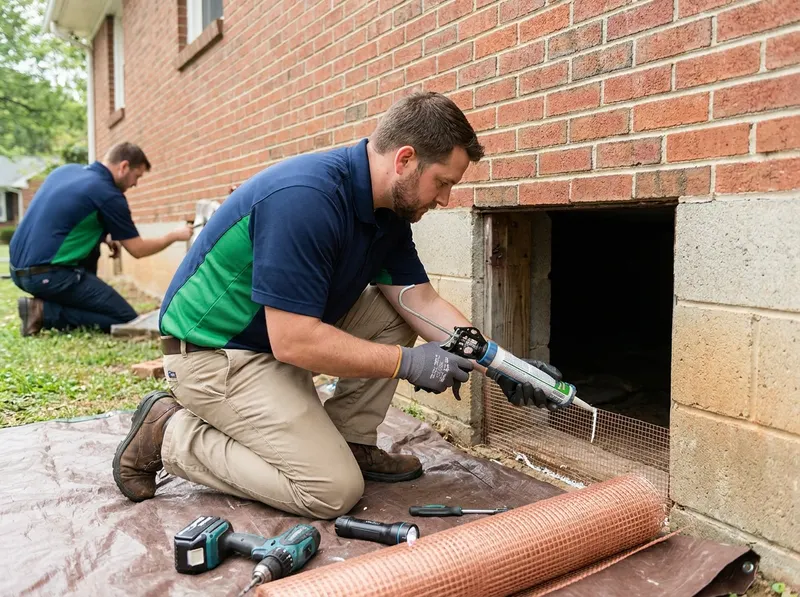
Rodent exclusion and eradication operates differently from standard baiting programs by prioritizing physical building integrity over repetitive chemical applications. Field investigations under the standards of the Pest Control Technology trade association confirm that house mice access openings as narrow as 0.25 inches, while mature Norway rats pass through gaps measuring 0.5 inches. In historic properties across Belmont-Hillsboro, Germantown, and East Nashville, crawlspace vents, rub-marked sill plates, and unsealed stone foundations offer immediate nesting pathways. Technicians inspect rooflines, masonry transitions, and plumbing penetrations, sealing voids with 19-gauge galvanized hardware cloth, copper mesh, and elastomeric compounds compliant with ASTM International building standards. This physical enclosure isolates resident pests, enabling decisive indoor capture using closed-box snap stations that protect companion animals and children as guided by the National Pesticide Information Center.
Active river corridors like the Cumberland River basin and dense foliage around Shelby Bottoms Greenway and Radnor Lake State Natural Area create year-round rodent reserves. In high-canopy neighborhoods such as Sylvan Park, The Nations, and Inglewood, roof rats exploit overhanging limbs to penetrate attic soffits and ridge vents, chewing through wiring assemblies regulated by the National Fire Protection Association. Ground-dwelling Norway rats more frequently target subterranean entry routes in Crieve Hall and Donelson slab-on-grade construction. Property managers must balance immediate structural defense against long-term maintenance: chemical tracking powders offer temporary knockdowns but create carcass-odor risks behind drywall, whereas structural proofing requires an upfront investment that permanently mitigates infestation potential.
Remediation follows an objective three-step sequence. Step one comprises a complete thermal and visual structural assessment to log every void along the envelope according to EPA Integrated Pest Management principles. Step two executes physical barrier installation on the exterior while placing localized, tamper-resistant capture stations along monitored interior runways. Step three delivers secondary follow-up visits within 7 to 10 days to clear traps, verify seal durability, and deodorize contaminated nesting zones under CDC Rodent Control biosafety standards. For inquiries or assessments, phone (629) 319-7843.
Every job gets a firm, written price after a free on-site visit.
Tell us about your rodent exclusion & eradication job in Nashville and we'll send a clear, written quote, usually the same day.
 MapleDrift Extermination