Structural timber infestations by Camponotus pennsylvanicus generate fine, sawdust-like wood shavings termed frass beneath structural framing. Unlike subterranean termites that consume cellulose fiber, carpenter ants…
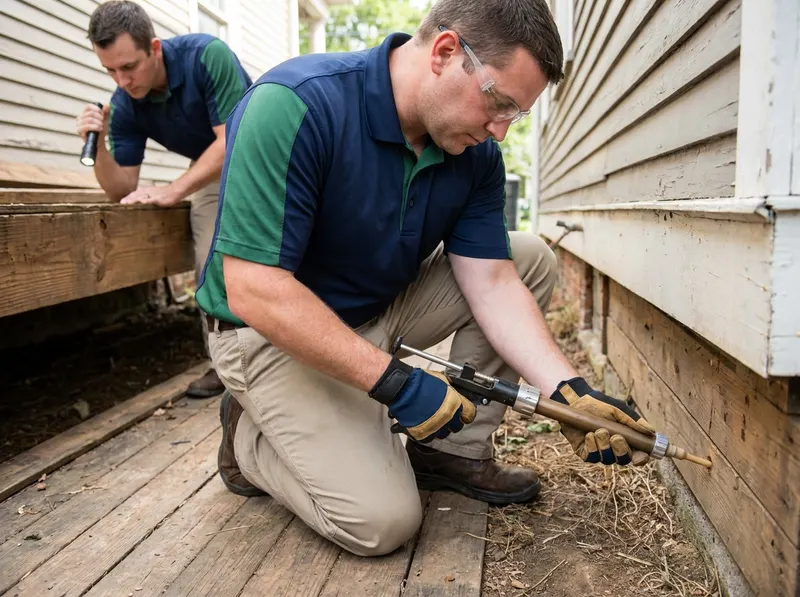
Structural timber infestations by Camponotus pennsylvanicus generate fine, sawdust-like wood shavings termed frass beneath structural framing. Unlike subterranean termites that consume cellulose fiber, carpenter ants excavate smooth hollow galleries directly within softwood framing members to rear brood. In historic turn-of-the-century residences across Belmont-Hillsboro, Sylvan Park, and Germantown, high relative ambient humidity and settling floor joists often yield damp sill plates that attract parent colonies. Modern slab homes throughout The Nations and Crieve Hall frequently experience satellite nest formation behind dishwasher alcoves, leaking shower pans, and subfloor plumbing penetrations. MapleDrift Extermination executes an initial forensic baseline assessment utilizing high-resolution pinless thermal moisture meters to delineate latent water leaks that harbor colony queens behind interior wall substrates.
Eradication strategy requires separating parent colonies from secondary nesting sites. In the densely forested canopies surrounding Percy Warner Park, Radnor Lake State Natural Area, and Cheekwood Estate & Gardens, parent colonies thrive within wet rot hollows of mature oak and hickory canopies. Worker ants establish satellite networks within adjacent structures, navigating along utility wire paths and overhanging tree branches into fascia boards. Our technicians inspect exterior tree canopies following International Society of Arboriculture structural clearance standards to sever these natural bridges. Indoors, our team introduces specialized non-repellent active ingredients adhering to EPA registered transfer chemistries. Worker ants track these micro-actives throughout interior nesting galleries, transferring lethal doses to reproductive queens via mutual trophallaxis rather than scattering when exposed to traditional retail aerosol sprays.
Following exterior baiting and precision void injection, technicians compile a detailed structural digital entry-point map that isolates compromised framing sections. Crawlspace perimeters in East Nashville, Inglewood, and Donelson are treated according to Tennessee Department of Agriculture pesticide regulatory standards, applying protective liquid barriers along masonry stem walls and structural support piers. To safeguard local aquatic ecosystems near the Cumberland River, all application practices comply with the federal Clean Water Act and watershed guidelines defined by the Metro Nashville Water Services stormwater division. Technicians measure crawlspace ambient relative humidity against guidelines established by the Building Science Corporation, confirming that elevated timber moisture readings drop below 16 percent to permanently prevent colony re-establishment.
Every structural eradication protocol operates independently of rigid, mandatory annual treatment bundles. Residential treatments prioritize pet safety and child health by deploying targeted interior bait formulations and non-volatile void powders directly into wall plates rather than broad surface baseboard spraying, following recommendations from the National Pesticide Information Center. While exterior foundation barriers effectively neutralize seasonal satellite foraging trails, structural recovery ultimately demands addressing mechanical water intrusions. Homeowners can reach our regional assessment line at (629) 319-7843 to verify diagnostic availability.
Every job gets a firm, written price after a free on-site visit.
Tell us about your carpenter ant structural eradication job in Nashville and we'll send a clear, written quote, usually the same day.
 MapleDrift Extermination